
Recent slide in inflation no consolation amid exceptional shrinkage in industrial growth.

Blaming high cash balance with the Government for aggravating liquidity strain in the system, the Reserve Bank on Thursday asked it to loosen purse strings for easing the situation. "On Wednesday, the government cash balance stood at Rs 92,000 crore (Rs 920 billion).

Ahead of the monetary policy review, RBI governor D Subbarao is expected to meet Prime Minister Manmohan Singh and finance minister Pranab Mukherjee on October 23.

In an interview with Business Standard, RBI Governor justifies action against the real estate sector, saying home prices in most metros have crossed pre-crisis levels.

MFI tactics have even prompted Andhra Pradesh Cabinet to approve an ordinance to rein them in.
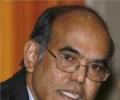
Stating that counter-cyclical measures to combat the impact of the global financial meltdown were important, Subbarao said the government borrowings had gone up 'rapidly and abruptly' hindering transmission of monetary measures to bring about lowering of interest rates.
RBI's policy stance must address concerns over slowing output
RBI Governor D Subbarao aims to revive growth by increasing the flow of credit through reduction in policy rates. By reducing the repo rate by another 25 basis points, he is hinting at a further reduction in interest rates. And, through the 25 bps cut in reverse repo rate, he is trying to make it less remunerative for banks to park surplus liquidity with the central bank and instead prodding them to lend more to the productive sectors.
In view of the need to enhance credit delivery to the employment- intensive micro and small enterprises sector, it has been decided to provide refinance of an amount of Rs 7,000 crore (Rs 70 billion) to the Small Industries Development Bank of India under the provisions of Section 17(4H) of the Reserve Bank of India Act, 1934.

Reserve Bank of India Governor D Subbarao has said India, being a current account-deficit country, is more vulnerable to sudden reversals in capital flows and short-term overseas portfolio money than nations which have a current account surplus.
Terror attacks in Mumbai will impact capital flows in the short term, ICICI Bank managing director and chief executive officer K V Kamath said in Mumbai.

Asserting that the withdrawal of stimulus is in the best interest of the economy in the current scenario of high inflation, the RBI said that it has started unwinding the emergency measures plugged in during the financial crisis.
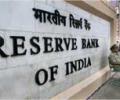
The International Monetary Fund and the World Bank had forecast that India's economy would grow at 8 per cent and 9 per cent, respectively.

When it comes to running between the wickets -- which is exactly what an FM and a governor do -- Jadeja always defers to Dhoni's larger judgement of the situation and the needs of the team, observes T C A Srinivasa-Raghavan.
Prime Minister Manmohan Singh today reviewed measures taken by the government to ease the liquidity crunch faced by India Inc arising out of the global financial crisis as well as discussed possible measures to help Indian exporters tide over the downturn in key markets like the US and Europe.

With budgetary preparations on in full swing, the Reserve Bank of India on Friday advised the Finance Minister to at least partially roll back the stimulus that was provided to help the industry cope with the financial crisis.

There could possibly be some reduction in home/auto loan outgo.
Professional forecasters have added to Reserve Bank of India Governor Duvvurri Subbarao's dilemma on timing the exit from an accommodative monetary policy stance.

Reserve Bank of India (RBI) Governor Duvvuri Subbarao said inflation would determine the future policy and the effort would be to manage the balance between growth and inflation.

As the first quarter review of the credit policy approaches, voices from the market are getting louder by the day that 'baby steps' may not be sufficient to fight rising prices.
The Reserve Bank of India's governor said On Thursday that there is a cost to any further fiscal stimulus package as it would put pressure on credit markets. However, RBI Governor Duvvuri Subbarao did not elaborate further on what this additional cost would be.
With the average WPI-based inflation at 7.5% and CPI-based one above 10%, a bit of aggression is required to beat inflation. Four experts give their views.
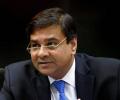
This time the all-powerful interest-rate setting panel, whose constitution was notified by the government on Thursday, will take call on interest rate. But that's not the only change. The Reserve Bank of India has also decided to change the timing of announcement of its policy review, due next Tuesday, to mid-afternoon.
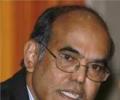
The Reserve Bank of India (RBI) on Monday said that the timing and sequence of exit from an easy monetary policy were still a challenge.

Faced with the challenging task of balancing growth and inflation, the Reserve Bank of India will take measures in its quarterly review later this month to perk up the economy and to control inflation, which rose to 0.83 per cent for the third week of September.
Except for the change in the inset letter, the design of these notes to be issued now is similar in all respects to the banknotes in Mahatma Gandhi Series -- 2005, with additional or new security features issued on October 21,2005.
This failure of basic short-term policy is surprising, given the star power that this government brings to its economic management.
The NSE Nifty closes at 5,134, up 22 points. Global markets are trading mixed; European markets are marginally in the green while the US index futures are flat.

Data released on Thursday showed prices of essential commodities like cereals went up by 12.7 per cent, rice by 11.75 per cent, wheat 12.6 per cent and pulses rose by 42 per cent.
The wholesale price index, coming below four per cent, may prompt the Reserve Bank of India to cut key policy rates. An indication was made by the RBI Governor D Subbarao in Tokyo on Wednesday. During the week, prices of manufactured items such as sugar, imported edible oil and textile items such as cotton yarn got cheaper.

On Monday, RBI announced that 26 entities, including Tata Sons, LIC Housing Finance, Aditya Birla Nuvo, Department of Posts, Reliance Capital, L&T Finance and Bajaj Finserv, applied for grant of bank licences.

Jaitley has made it a habit of giving soundbytes to the media like his predecessors on why RBI should cut interest rates
On July 15, the Reserve Bank put in place measures to restore stability in the foreign exchange market, including raising the Marginal Standing Facility and bank rates to 10.25 per cent and restricting access by way of repos to Rs 75,000 crore (Rs 750 billion).

'People trust India and Indians a lot more than they trust China and the Chinese.'

The Financial Stability and Development Council members include heads of regulatory bodies like RBI, Sebi and Insurance Regulatory Development Authority.

Gokarn was the first Indian central banker who regularised warnings to the government, through the monetary policy statement, on the need to reduce fiscal deficit.

The RBI left key policy rates unchanged and cut the GDP growth estimate for this fiscal to 5.5 per cent from 5.7 per cent.

As the global economy sways into uncertain territories and domestic prices almost certain to rise, Raghuram Rajan's ideas would have come in handy.
The move will to a large extent speed up the monetary transmission process--which is banks passing on the rate cuts that the Reserve Bank announces to their borrowers without much delays--something that has been missing all these while and something that the RBI has been unhappy with.

From a national point of view, inflation is the biggest threat posed by finance ministers.
